Understanding Crop Mutations
Crop mutations are rare variants of normal crops that appear randomly during harvesting. These special crops have unique visual effects, sell for significantly higher prices, and are highly sought after by collectors and traders.
There are four mutation tiers in Grow a Garden, each progressively rarer and more valuable than the last. Understanding how mutations work and how to farm them efficiently can transform your gameplay from casual farming to serious profit-making.
This comprehensive guide covers everything you need to know about mutations: how they work, which crops mutate most frequently, proven farming strategies, and how to maximize your chances of getting that coveted Diamond mutation.
The Four Mutation Tiers
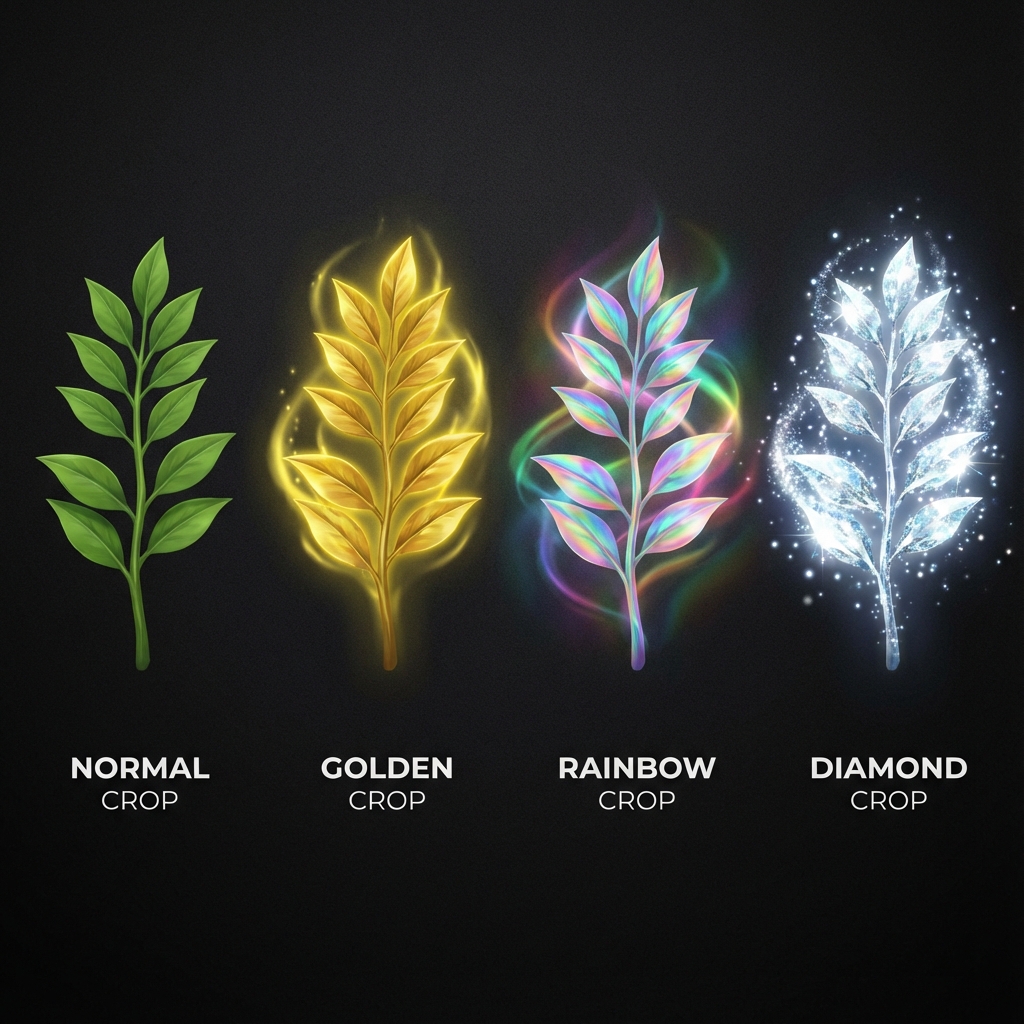
🟡 Golden Mutations (Uncommon)
Appearance: Crops with a golden glow and sparkle effects
Value Multiplier: 5x normal crop value
Drop Rate: Approximately 1 in 50 harvests (2%)
Best for: Consistent extra income without extreme rarity
🌈 Rainbow Mutations (Rare)
Appearance: Crops with rainbow-colored auras and particle effects
Value Multiplier: 15x normal crop value
Drop Rate: Approximately 1 in 200 harvests (0.5%)
Best for: Significant profit boosts and trading
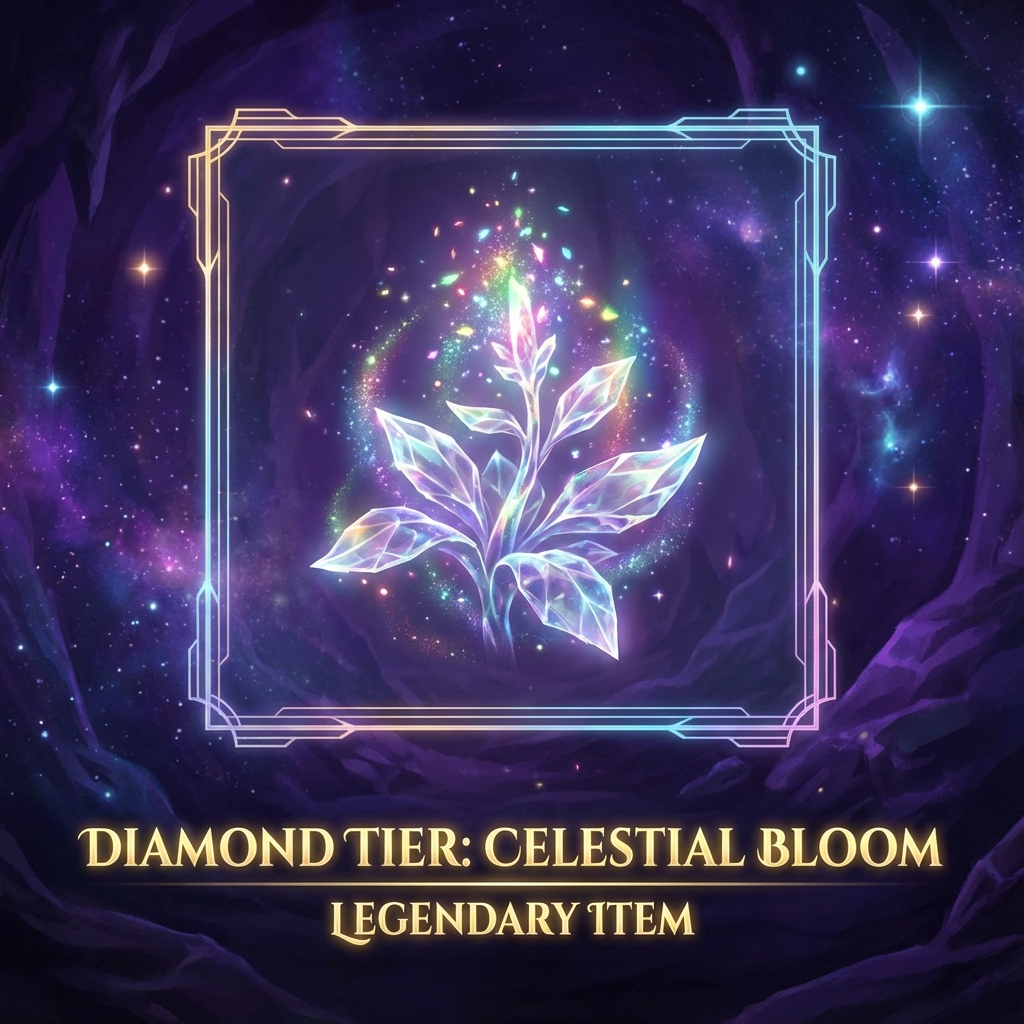
💎 Diamond Mutations (Epic)
Appearance: Crystalline crops with brilliant white/blue sparkles
Value Multiplier: 50x normal crop value
Drop Rate: Approximately 1 in 1000 harvests (0.1%)
Best for: Massive single-sale profits and prestige
🔥 Mythical Mutations (Legendary)
Appearance: Crops with unique mythical effects and animations
Value Multiplier: 100x+ normal crop value
Drop Rate: Approximately 1 in 5000 harvests (0.02%)
Best for: Ultimate collectors and extreme traders
Best Crops for Mutation Farming
Top 5 High-Mutation Crops
1. Strawberries - Highest base mutation rate (3%), fast growth, multi-harvest
2. Pumpkins - Excellent mutation rate (2.5%), high base value means mutations are extremely profitable
3. Watermelons - Good mutation rate (2%), premium crop with valuable mutations
4. Tomatoes - Decent mutation rate (1.8%), accessible early, multi-harvest advantage
5. Corn - Standard mutation rate (1.5%), but fast growth allows more attempts
Why These Crops Work Best
The best mutation farming crops combine three factors: reasonable mutation rates, affordable seed costs (so you can plant many), and fast growth times (so you get more harvest attempts per hour). Strawberries dominate because they excel in all three categories.
Proven Mutation Farming Strategies
Strategy #1: Mass Planting Method
Plant 20-30 of the same high-mutation crop simultaneously. The more crops you harvest at once, the higher your statistical chance of getting at least one mutation per harvest cycle.
Math: With a 2% mutation rate, planting 30 strawberries gives you a 45% chance of getting at least one Golden mutation per harvest. That's nearly 1 mutation every 2 harvests!
Strategy #2: The Rotation System
Instead of planting all crops at once, stagger them in 3-minute intervals. This creates a constant rotation where you're always harvesting something, maximizing your total harvest count per hour.
Setup: Plant 10 strawberries now, 10 more in 3 minutes, 10 more in 6 minutes. You'll harvest 10 crops every 3 minutes instead of 30 crops every 9 minutes, giving you more frequent chances at mutations.
Strategy #3: Pet Boost Optimization
Certain pets increase mutation chances. The Lucky Rabbit increases mutation rates by 25%, turning a 2% chance into a 2.5% chance. This might seem small, but over hundreds of harvests, it results in significantly more mutations.
Best Pets for Mutations:
- Lucky Rabbit - +25% mutation chance
- Mystic Cat - +15% mutation chance, +10% chance for higher tier
- Fortune Dragon - Doubles mutation value when sold
Strategy #4: The Patience Method
Focus on one crop type exclusively for an entire day. Plant only strawberries for 4-6 hours straight. The sheer volume of harvests virtually guarantees multiple Golden mutations and a good chance at Rainbow or even Diamond variants.
Maximizing Mutation Profits
Never Sell to NPCs
The in-game shop pays the standard multiplier for mutations, but other players will pay 2-3x more. A Diamond strawberry worth 10,000 coins to the shop can sell for 25,000-30,000 coins to collectors.
Know Your Market Prices
Different mutations have different market values based on crop type and rarity:
- Golden Strawberry: 500-800 coins (player market)
- Rainbow Pumpkin: 8,000-12,000 coins
- Diamond Watermelon: 40,000-60,000 coins
- Mythical Any Crop: 100,000+ coins
Trading vs Collecting
Decide early whether you're farming mutations for profit or collection. Collectors keep one of each mutation type. Traders sell everything for maximum coins. Both strategies are valid, but mixing them reduces efficiency.
Advanced Mutation Techniques
The Combo Boost Theory
Some players believe harvesting crops in rapid succession (within 5 seconds) increases mutation chances. While not officially confirmed, anecdotal evidence suggests a small boost. It doesn't hurt to try!
Mutation Streak Tracking
Track your harvests without mutations. Some players report increased mutation rates after long dry spells, suggesting a possible "pity system." Keep a simple tally to test this yourself.
Seasonal Events
During special events, mutation rates often increase by 50-100%. These are the absolute best times to farm mutations aggressively. Stock up on seeds before events and go all-in during the event period.
Common Mutation Mistakes
1. Farming Low-Mutation Crops
Not all crops have equal mutation rates. Avoid wasting time on crops like carrots or wheat that have very low mutation chances.
2. Selling Mutations Too Quickly
Mutation prices fluctuate. A Diamond crop might sell for 40K today but 60K during an event. If you don't need immediate coins, wait for better prices.
3. Ignoring Multi-Harvest Crops
Multi-harvest crops can mutate on ANY harvest, not just the first. Strawberries with 5 harvests give you 5 chances at mutations per seed planted!
4. Not Using Mutation-Boosting Pets
A 25% mutation boost from the Lucky Rabbit means 25% more mutations over time. That's potentially thousands of extra coins per day.
The Diamond Crop Challenge
Getting your first Diamond crop is a rite of passage in Grow a Garden. Here's a realistic roadmap:
Week 1: Foundation
Build up capital farming regular crops. Save 10,000 coins for mutation farming.
Week 2: Golden Farming
Start mass-planting strawberries. Aim for 10-15 Golden mutations. Sell them to fund more seeds.
Week 3: Rainbow Hunting
With profits from Goldens, plant even more strawberries. You should get 2-3 Rainbow mutations this week.
Week 4: Diamond Push
Plant 50+ strawberries per day. With 300+ harvests daily, you have a 26% chance of getting a Diamond each day. Most players get their first Diamond in weeks 3-5.
Essential Tools
- Mutation Guide - Complete mutation database
- Crop Database - Mutation rates for all crops
- Value Calculator - Calculate mutation values
FAQ: Crop Mutations
Can any crop mutate?
Yes, but mutation rates vary dramatically. Premium crops like strawberries and pumpkins have much higher rates than basic crops.
Do mutations affect crop growth time?
No, mutations are determined at harvest, not planting. Growth time remains the same.
Can I increase mutation chances with fertilizer?
No, fertilizer only affects growth speed, not mutation rates. Use pets for mutation boosts instead.
What's the rarest mutation ever recorded?
Mythical Pumpkins are considered the rarest, with some selling for over 500,000 coins to collectors.
Start Your Mutation Journey
Mutation farming adds an exciting element of chance and massive profit potential to Grow a Garden. By focusing on high-mutation crops like strawberries, using mass-planting strategies, and equipping mutation-boosting pets, you'll start seeing Golden mutations regularly and have a realistic shot at Diamond and even Mythical variants.
Remember: mutations are a marathon, not a sprint. Stay patient, plant consistently, and those rare Diamond crops will come!